Marketing Automation: What It Is and How It Saves You Time and Money

Let’s be honest: running a business in the digital age means you’re constantly being pulled in a dozen directions at once. You need to post on social media, send follow-up emails, segment your leads, track your campaigns, nurture your prospects, and somehow still find time to actually deliver your product or service. If that sounds exhausting, that’s because it is — when you try to do it all manually.
The good news is that marketing automation was built precisely to solve this problem, and businesses of every size are using it to save real time and money without sacrificing the quality of their customer relationships.
The phrase “marketing automation” might conjure images of complex enterprise software or cold, robotic email blasts that nobody reads. But that’s a caricature of what modern automation actually looks like when it’s done well. Today’s tools are sophisticated enough to send the right message to the right person at exactly the right moment — all without you lifting a finger after the initial setup.
The savings in time and money aren’t marginal, either. Businesses that implement automation strategically often report cutting their marketing workload by 30 to 50 percent while simultaneously improving their conversion rates. That’s not a theoretical benefit; it’s a documented pattern across industries.
This article is going to walk you through what marketing automation actually is, how it works in practice, which tools are worth your attention, and most importantly, how to implement it in a way that genuinely recaptures your time and money instead of just adding another layer of technology to manage. Whether you’re a solopreneur doing everything yourself or a marketing team of five trying to scale without hiring, there’s something useful here for you.
What Marketing Automation Really Means Beyond the Buzzword
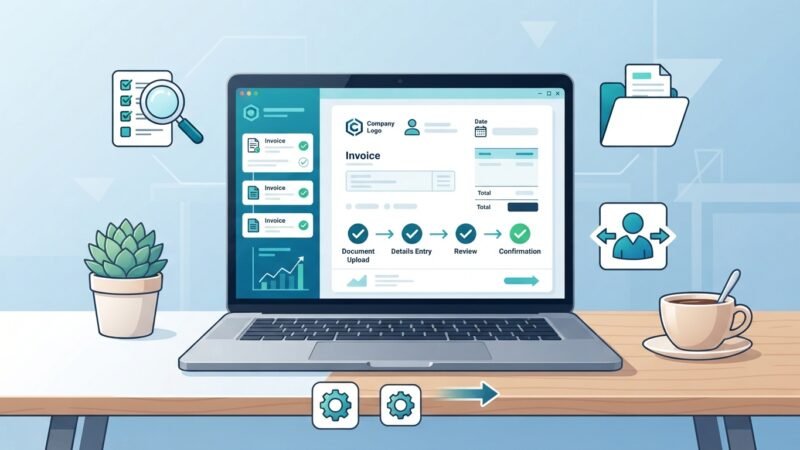
At its core, marketing automation refers to the use of software to execute, manage, and analyze marketing tasks and workflows automatically — tasks that would otherwise require manual effort on a recurring basis. The spectrum is wide. On the simpler end, automation might mean scheduling a week’s worth of social media posts in advance.
On the more sophisticated end, it means building a complete behavioral sequence that delivers a personalized email to a prospect three hours after they viewed a specific product page, then triggers a different follow-up if they didn’t click, and flags a sales rep to call if they did. All of this happens without any manual decision-making in real time.
The key concept underlying all of this is triggers and actions. A trigger is something that happens — a user subscribes to your list, abandons their cart, visits a pricing page, clicks a specific link, or reaches a certain lead score. An action is what your automation system does in response — sends an email, adds a tag, moves the contact to a different segment, alerts a team member, or updates a field in your CRM.
When you string together multiple triggers and actions into a logical sequence, you’ve built a workflow. A good workflow does in seconds what might take a human 20 minutes to do manually — and it does it consistently, at any hour of the day, for every single contact simultaneously. That consistency alone is where enormous amounts of time and money get recovered.
It’s also worth distinguishing marketing automation from related but distinct concepts. Email marketing is one channel within marketing automation, but automation is broader — it can span email, SMS, social media, paid advertising, CRM updates, and even internal team notifications. CRM software manages customer relationships and data, but doesn’t always automate marketing touchpoints on its own.
True marketing automation platforms bring these things together, creating a system where your data informs your messaging, your messaging informs your data, and the whole loop runs with minimal human intervention.
The Real Ways Marketing Automation Saves Time and Money

Let’s get specific, because “saves time and money” can feel vague until you see the actual mechanisms. The most obvious savings come from eliminating repetitive manual tasks. Think about the time a typical marketing team spends every week: writing and scheduling individual emails, manually moving leads through a pipeline, copying data between platforms, generating reports from spreadsheets, and following up with leads who haven’t heard from them in a while.
These tasks aren’t intellectually demanding — they’re administrative. And administrative work, while necessary, doesn’t scale. The more leads you have, the more time it consumes.
Automation removes this linear relationship between volume and labor, which is what makes it such a powerful lever for growth without proportional cost increases.
The money savings go deeper than just labor cost reduction. One of the most significant financial impacts of marketing automation is improved lead nurturing, which directly affects your revenue. Studies from the Aberdeen Group have shown that companies using automation see 53% higher conversion rates than non-users.
The reason is straightforward: most leads are not ready to buy at the moment they first engage with you. They need to be educated, reassured, and reminded — over time, through relevant touchpoints. Without automation, many of these leads simply fall through the cracks because no human has the bandwidth to follow up with every single one at the right intervals.
With automation, every lead gets nurtured. No one is forgotten. And converting more of the leads you already have is almost always cheaper than going out and acquiring new ones.
That’s a direct, measurable way automation saves time and money.
There’s also the question of ad spend efficiency. When you automate your lead segmentation and scoring, you gain the ability to suppress cold leads from your retargeting audiences and focus paid ad dollars only on people who’ve demonstrated genuine purchase intent. This alone can meaningfully reduce wasted ad spend — a category where many businesses are hemorrhaging time and money without realizing it.
Even a 15% improvement in ad spend efficiency can represent tens of thousands of dollars annually for a mid-sized e-commerce business.
Core Marketing Automation Workflows Every Business Should Consider
Not all automation workflows are created equal. Some deliver outsized returns almost immediately; others are nice-to-haves that you can build out later. Here are the foundational workflows that consistently produce the best results for the widest range of businesses — and where you should focus your initial investment of time and money during setup.
- Welcome sequence: Triggered when someone subscribes to your email list or creates an account. A well-crafted welcome sequence (3 to 5 emails over 7 to 10 days) introduces your brand, sets expectations, delivers immediate value, and guides new subscribers toward their first meaningful action. Welcome emails consistently achieve the highest open rates of any email type — often 50 to 60 percent — making this sequence one of the highest-ROI automation investments you can make.
- Abandoned cart recovery: For e-commerce businesses, this is non-negotiable. A sequence of 2 to 3 emails sent within 1, 24, and 72 hours of cart abandonment can recover 5 to 15 percent of otherwise lost sales. This is pure recovered revenue from people who already showed buying intent.
- Lead nurturing drip campaign: For businesses with longer sales cycles, a drip campaign keeps leads warm over weeks or months with educational content, case studies, and social proof. The goal is to be the most helpful and credible brand in their inbox by the time they’re ready to make a buying decision.
- Re-engagement campaign: Targeting subscribers who haven’t opened an email in 90 days or more. A well-designed re-engagement sequence can win back 10 to 20 percent of dormant contacts — and helps you identify and remove the truly disengaged, which improves your deliverability and overall list health.
- Post-purchase sequence: Triggered after a customer completes a purchase. This is where you thank them, set expectations for delivery or onboarding, cross-sell or upsell relevant products, and plant the seed for a review or referral. The post-purchase window is when customer satisfaction is highest — which makes it the best time to deepen the relationship.
- Lead scoring and sales handoff: Automatically assigning points to contacts based on behaviors (email opens, link clicks, page visits, form submissions) and triggering a notification to your sales team when a lead crosses a certain score threshold. This ensures your sales team focuses their energy on the most sales-ready prospects, saving significant time and money in the sales process.
Each of these workflows requires an upfront investment of time to plan, write, and configure. But once they’re live, they run indefinitely with only periodic review and optimization. That’s the nature of automation’s leverage: you spend time once and continue benefiting for months or years.
Choosing the Right Marketing Automation Platform Without Wasting Time and Money

The marketing automation software landscape is genuinely crowded, and choosing the wrong platform can cost you significantly — both in subscription fees and in the time you’ll spend migrating away from it later. The good news is that the right choice is much simpler than the vendor marketing makes it seem, because it largely comes down to matching platform sophistication to your actual current needs rather than hypothetical future needs.
For small businesses and solopreneurs just getting started with automation, Mailchimp and MailerLite offer accessible entry points with free tiers that cover basic email automation, welcome sequences, and simple segmentation. They’re limited in sophistication but excellent for learning the fundamentals without significant upfront investment of time and money. If you have a few hundred to a few thousand subscribers and your automations are relatively simple, either platform serves you well.
For businesses with more complex needs — behavioral segmentation, advanced lead scoring, multi-channel automation, deep CRM integration — ActiveCampaign is frequently the best value in the mid-market. It offers enterprise-level automation capabilities at a fraction of the cost of tools like Marketo or Pardot, and its interface is significantly more intuitive than many competitors at its capability level. HubSpot is another strong contender at this tier, particularly if you want email marketing, CRM, and sales automation under one roof — though its pricing can escalate quickly as your contact list grows.
For e-commerce businesses specifically, Klaviyo has become the dominant platform for good reason. Its native integrations with Shopify, WooCommerce, and other e-commerce platforms allow for highly granular behavioral segmentation based on purchase history, browsing behavior, and product affinity — enabling the kind of personalized automation that consistently drives meaningful revenue recovery and increases customer lifetime value.
- Mailchimp — Best for beginners; free up to 500 contacts with basic automation
- MailerLite — Clean interface, generous free tier, excellent deliverability
- ActiveCampaign — Best value for advanced automation; starts around $15/month
- HubSpot — All-in-one CRM + marketing; free CRM with paid marketing tiers
- Klaviyo — Best-in-class for e-commerce; deep Shopify and WooCommerce integration
- Brevo (formerly Sendinblue) — Strong SMS + email automation with competitive pricing
Marketing Automation Beyond Email: Social Media, SMS, and Paid Advertising
When most people think about marketing automation, they think about email. And email is absolutely the highest-ROI channel to automate first. But limiting your automation thinking to email leaves significant value on the table.
Modern marketing automation strategy extends across multiple channels, and the compounding effect of coordinating these channels automatically is where the real magic — and the real savings in time and money — happens.
Social media automation is one of the most immediately impactful expansions beyond email. Tools like Buffer, Hootsuite, and Later allow you to plan and schedule weeks of social content in a single session, analyze what’s performing, and maintain a consistent posting cadence without daily manual effort. More sophisticated tools like MeetEdgar go further, automatically recycling your best evergreen content on a rotating schedule so your social presence stays active even during your busiest periods.
The time saved here isn’t trivial — for a business posting on three platforms, manual daily posting can consume 30 to 60 minutes per day. Automating a week of content in 90 minutes recaptures most of that.
SMS automation is experiencing a significant moment. With email open rates hovering around 20 to 25 percent for many industries, SMS open rates consistently exceed 90 percent — and most messages are read within three minutes of delivery. Automated SMS workflows for appointment reminders, flash sales, order updates, and abandoned cart recovery are delivering remarkable results for businesses willing to invest the setup time.
Platforms like Attentive, Postscript (for Shopify), and Brevo integrate SMS natively with email automation, allowing you to build coordinated multi-channel sequences that reach customers through whichever channel they’re most responsive to — saving time and money while dramatically increasing the chance of message receipt.
On the paid advertising side, automation tools built into Google Ads and Meta Ads Manager — combined with your marketing automation platform’s audience sync features — allow you to automatically update your ad targeting based on customer behavior. When someone converts, they’re automatically removed from acquisition audiences and added to retention audiences. When a subscriber becomes highly engaged, they can be added to lookalike seed audiences.
This real-time synchronization between your marketing automation and your paid channels eliminates wasted ad spend with precision that manual campaign management simply cannot achieve at scale.
Common Mistakes That Turn Automation Into a Waste of Time and Money
Marketing automation is powerful, but it is not self-correcting. Done poorly, it doesn’t just fail to save you time and money — it actively wastes both, and can damage your brand reputation in the process. Understanding the most common failure modes helps you avoid them from the start, which is far less costly than discovering them after six months of sending bad automations to your entire list.
The most damaging mistake is treating automation as a substitute for strategy. Automation is a delivery mechanism; it amplifies whatever strategy you put into it. If you automate a poor strategy — the wrong messages, the wrong timing, the wrong audience — you’ll be delivering poor experiences faster and at greater scale.
Before you configure a single workflow, you need a clear answer to three questions: Who am I talking to? What do they actually need from me at this stage of their relationship with my brand? And what do I want them to do next? Without clear answers, your automation will feel impersonal, irrelevant, and annoying — exactly the opposite of what well-designed automation should feel like.
A second common mistake is over-automating too early. There’s a temptation, once you discover how much automation can do, to build complex branching workflows for every conceivable scenario. This creates a tangled, unmaintainable system that’s difficult to audit, update, or troubleshoot — and ironically consumes enormous amounts of time and money to maintain.
The better approach is to start with the highest-impact workflows (welcome sequence, abandoned cart, post-purchase), get them right, measure their performance, and then expand systematically. Complexity should be earned by demonstrating results, not assumed from day one.
A third mistake is failing to maintain your automations after launch. Automation is not truly “set and forget.” Prices change, offers expire, content becomes outdated, links break, and your brand voice evolves.
An automated email that references a promotion that ended six months ago, or a tool you no longer use, undermines trust with every send. Build a quarterly audit into your calendar: review each active workflow, check every link, update any outdated references, and review performance metrics to identify opportunities for improvement. This maintenance habit is what separates automation that compounds in value over time from automation that quietly deteriorates.
Measuring Whether Your Automation Is Actually Saving Time and Money
One of the most important disciplines in marketing automation is measurement — specifically, measuring whether your automation is actually delivering the time and money savings and revenue gains you expected. Without a clear measurement framework, you’re running an expensive experiment with no feedback loop, which is a pattern that tends to produce expensive disappointment.
On the time savings side, the simplest approach is to document the manual time you spent on specific tasks before automating them, then compare against your ongoing time investment after automation (primarily setup and maintenance). For most businesses, this comparison reveals a payback period of two to four weeks for basic workflows, after which the time savings compound indefinitely. Track this in a simple spreadsheet — it also builds the business case for further automation investment if you need to justify it to stakeholders.
On the revenue side, the core metrics to track are straightforward but often overlooked. For lead nurturing sequences, track conversion rate from lead to customer for automated leads versus non-automated leads. For abandoned cart sequences, track recovery rate and revenue recovered.
For post-purchase sequences, track repeat purchase rate and average order value for customers who went through the sequence versus those who didn’t. Most marketing automation platforms provide these metrics natively, but you need to know to look for them and act on what you find. The goal is not to set up automation and forget it — it’s to set up automation, measure it, optimize it, and let it compound in effectiveness over time.
A metric that’s often undervalued is list health: your bounce rate, spam complaint rate, and unsubscribe rate. These tell you whether your automation is resonating with your audience or alienating them. If your unsubscribe rate spikes after a particular automated sequence, that’s a clear signal that something in that sequence needs to change.
Healthy list metrics protect your sender reputation, which in turn ensures your emails actually reach inboxes — and that’s foundational to everything else working. Poor deliverability is one of the most insidious ways automation that looks functional is actually draining time and money invisibly.
Building an Automation Mindset That Pays Off Long-Term
The businesses that get the most out of marketing automation over the long term aren’t necessarily the ones with the most sophisticated tools or the most complex workflows. They’re the ones that have internalized a particular way of thinking about their marketing operations: every time you find yourself doing the same task twice, ask whether it could be automated. Every time a customer has a predictable need at a specific stage of their journey, ask whether you could address it automatically.
Every time a human is making a repetitive decision based on the same criteria, ask whether that decision could be codified into a rule.
This mindset shift — from reactive, manual marketing to proactive, systems-based marketing — is what unlocks the compounding returns that make automation such a powerful long-term investment of time and money. It changes how you think about your role. Instead of being someone who executes marketing tasks, you become someone who designs marketing systems.
Systems, unlike tasks, don’t get tired. They don’t forget to follow up. They don’t take sick days.
And once they’re designed well, they continue delivering value every single day without proportional ongoing effort.
The path to this point doesn’t require a large team or a large budget. It requires starting somewhere — one well-chosen workflow, one consistent measurement habit, one optimization cycle — and building from there. The businesses that will have the most efficient, scalable marketing operations in three years are building their first automations today.
And the time and money they’re investing now is compounding into advantages their competitors will find very difficult to close. The question isn’t whether marketing automation is worth it. For virtually every business with a digital presence, it clearly is.
The question is: what’s your first workflow going to be?
Frequently Asked Questions About Marketing Automation
How much does marketing automation software typically cost?
Costs vary widely. Entry-level tools like MailerLite and Mailchimp offer free tiers for small lists. Mid-market platforms like ActiveCampaign start at around $15 to $29 per month for basic plans.
Enterprise platforms can run into hundreds or thousands of dollars monthly. The right investment depends entirely on your list size, workflow complexity, and the revenue impact you can attribute to automation.
How long does it take to set up marketing automation?
A well-structured welcome sequence can be live within a day or two. A full suite of core workflows — welcome, abandoned cart, nurturing, re-engagement, post-purchase — typically takes two to four weeks to plan, write, configure, and test. The upfront investment of time and money pays back within weeks for most businesses.
Can small businesses benefit from marketing automation, or is it only for large companies?
Small businesses arguably benefit more from automation than large companies, precisely because they have fewer people to do the work. Automation allows a team of one or two to maintain the kind of consistent, personalized marketing communication that larger teams do manually. The leverage is highest when human bandwidth is most constrained.
Will automation make my marketing feel impersonal?
Only if it’s done badly. When automation is built around genuine customer needs, delivered at the right moment, and written in a human voice, customers often don’t know — or care — that it’s automated. The goal is relevance and helpfulness.
Automation enables you to be more relevant more consistently than you ever could manually.
What’s the difference between marketing automation and a CRM?
A CRM manages customer data and relationships — contact information, deal stages, interaction history. Marketing automation executes and manages marketing communications based on that data. Many platforms now combine both functions, but they serve distinct purposes.
You generally need both to run a well-functioning marketing and sales operation.
How do I know if my automation is working?
Track the metrics that matter for each workflow: open rates, click rates, conversion rates, revenue attributed to automated sequences, and list health metrics like bounce rate and unsubscribe rate. Compare performance before and after automation, and benchmark against industry averages. Review and optimize at least quarterly to keep your automation compounding in value rather than degrading over time.
What aspect of your marketing currently consumes the most of your time? Have you experimented with automation in your business, and if so, what workflows have delivered the best results? Drop your thoughts in the comments below — real-world experience from practitioners is often the most valuable insight of all.

Michael Rowan is a dedicated writer and researcher specializing in Personal Finance and Investments. With a passion for helping individuals make smarter financial decisions, he creates informative and practical content designed to simplify complex financial topics.