Small Business Trends: What to Expect from the Future of Business

|
Getting your Trinity Audio player ready...
|
If you run a small business, you’ve probably noticed how fast everything is changing. New technologies, shifting customer behaviors, and economic pressures are reshaping entire industries almost overnight. Understanding what to expect from the future of business is no longer a luxury — it’s a survival skill.
The good news? Small businesses that stay informed and agile tend to come out ahead, precisely because they can pivot faster than large corporations.
In this article, we’re going to walk through the most important small business trends shaping the next few years. From artificial intelligence to the rise of local communities, we’ll cover what’s actually happening on the ground — not just buzzwords — and give you practical steps to stay competitive. Whether you run a bakery, a consulting firm, or an e-commerce store, these insights apply to you.
What to Expect from the Future of Business: The AI Revolution Is Already Here
Let’s start with the big one. Artificial intelligence is no longer something reserved for tech giants with massive R&D budgets. Tools like ChatGPT, Gemini, and Claude are being used daily by solopreneurs and small shop owners to write emails, answer customer questions, generate content, and even analyze sales data.
The barrier to entry has dropped dramatically, and this is one of the clearest examples of what to expect from the future of business — AI as a daily co-worker, not a distant concept.
The practical implication here is straightforward: if you’re not experimenting with AI tools yet, your competitors probably are. Start small. Use an AI assistant to draft your weekly newsletter, automate frequently asked customer questions through a chatbot, or use AI-powered accounting tools like
com” target=”_blank” rel=”noreferrer noopener”>Xero to save hours each month. The businesses that thrive won’t necessarily be the ones who use AI for everything — they’ll be the ones who use it strategically.
Beyond productivity, AI is also transforming personalized marketing. Platforms like Klaviyo and Mailchimp now use machine learning to predict when customers are most likely to buy, what they’re interested in, and how to craft messages that resonate. For a small business with a limited advertising budget, this kind of precision is a game-changer.
The Shift Toward Hyper-Local and Community-Driven Commerce
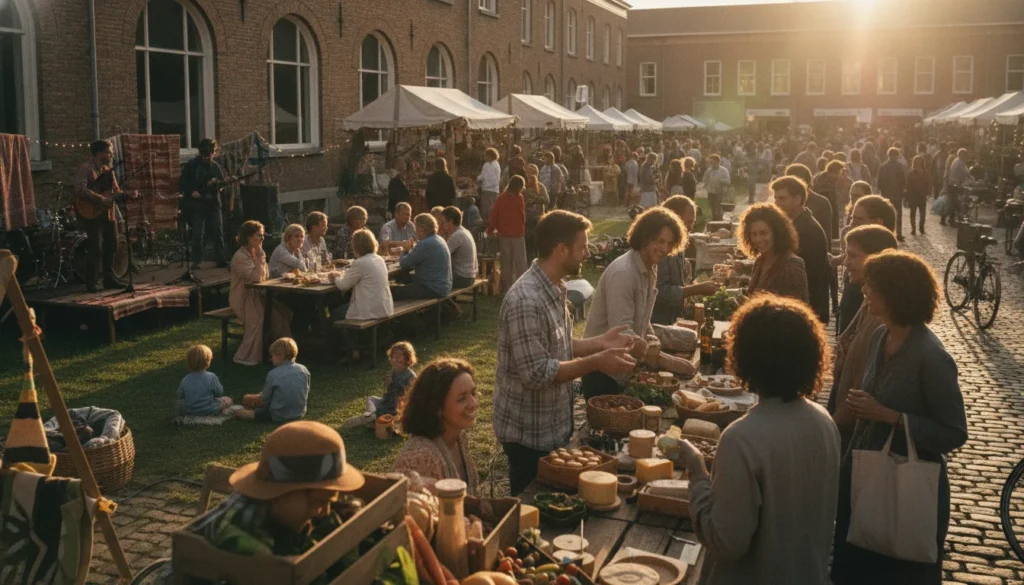
Here’s a trend that might surprise you: while everyone talks about going global, some of the most resilient small businesses are doubling down on local. Consumers are increasingly valuing where their money goes — they want to support real people in their communities, not faceless corporations. This shift is a key piece of what to expect from the future of business at the neighborhood level.
Platforms like Nextdoor and local Facebook groups have given small businesses a direct line to nearby customers.
Farmers’ markets, pop-up shops, and community events are seeing renewed interest. If you haven’t built a genuine local brand presence — one that tells your story, showcases your team, and celebrates your community ties — you’re leaving a significant competitive advantage on the table.
The practical move here is to invest in storytelling. Share behind-the-scenes content on Instagram or TikTok. Partner with other local businesses for cross-promotions.
Sponsor a community event. These actions don’t just build goodwill — they build loyalty, and loyal customers are your most powerful marketing engine.
Sustainable Business Practices Are Becoming Non-Negotiable
Sustainability used to be a differentiator. Increasingly, it’s a baseline expectation — especially among younger consumers. Studies consistently show that Gen Z and millennial shoppers are willing to pay more for products and services from businesses that demonstrate genuine environmental and social responsibility.
This is a major part of what to expect from the future of business over the next decade.
This doesn’t mean you need to overhaul your entire operation overnight. Small, visible changes matter. Switching to recycled packaging, partnering with eco-conscious suppliers, reducing food waste in a restaurant setting, or simply being transparent about your sourcing — these steps communicate values.
And communicating values builds trust.
- Reduce single-use plastics in packaging and in-store operations.
- Source locally to reduce carbon footprint and support regional suppliers.
- Publish a simple sustainability pledge on your website to signal commitment.
- Track and share progress — even small improvements resonate with conscious consumers.
- Explore certifications like B Corp or Fair Trade if they apply to your industry.
Sustainability also has an internal dimension. Businesses that treat employees well, offer fair wages, and provide growth opportunities attract and retain better talent — which directly impacts quality and customer experience. Ethical business practices are becoming a key differentiator in hiring, not just in marketing.
The Subscription Economy and Recurring Revenue Models

One of the smartest financial moves a small business can make right now is finding a way to build predictable, recurring revenue. The subscription model — once limited to Netflix and gym memberships — has expanded into virtually every sector. Coffee shops offer monthly bean subscriptions.
Consultants sell monthly retainer packages. Even local bookstores have launched “book of the month” clubs. Understanding what to expect from the future of business means recognizing that cash flow predictability is becoming a competitive advantage in itself.
Why does this matter so much? Because small businesses are disproportionately hurt by feast-or-famine revenue cycles. A subscription model creates a baseline income that makes planning, hiring, and investing in growth far more manageable. It also deepens customer relationships — subscribers feel invested in your business in a way that one-time buyers simply don’t.
If you’re wondering how to implement this, think about what you offer that customers need repeatedly. It could be a service (monthly cleaning, quarterly tax prep), a product (consumables, curated boxes), or even exclusive content and access (members-only discounts, early product launches). Tools like
co” target=”_blank” rel=”noreferrer noopener”>Subbly, or Shopify’s subscription apps make it technically straightforward to get started.
Digital Presence and E-Commerce: No Longer Optional
If the pandemic taught small businesses anything, it’s that a strong digital presence isn’t a nice-to-have — it’s a lifeline. Yet many small businesses still operate with outdated websites, no online booking systems, and minimal social media presence. This is one of the most urgent areas when it comes to what to expect from the future of business: the businesses that invest in digital infrastructure now will be far better positioned for whatever disruption comes next.
Your website is your digital storefront. It needs to load fast, work on mobile, and clearly communicate what you do, where you are, and how to contact or buy from you. Google’s Core Web Vitals directly affect your search ranking, so performance matters beyond just user experience.
Platforms like Shopify, Social commerce — the ability to buy directly through platforms like Instagram and TikTok — is another trend accelerating fast. If you sell physical products, setting up an Instagram Shop or TikTok Shop should be a priority. These platforms reduce friction in the buying journey and place your products in front of audiences who are already in a discovery mindset.
The future of retail for small businesses is increasingly happening on social platforms, not just websites.
Flexible Work Models and the Talent Landscape
The way people work has changed permanently. Remote and hybrid work models have expanded the talent pool for small businesses that previously could only hire locally. A small accounting firm in a mid-sized city can now hire a top-tier bookkeeper from across the country.
A marketing agency can build a distributed team without expensive office space. This flexibility is one of the most underappreciated aspects of what to expect from the future of business.
At the same time, the expectations of workers have evolved. Employees — especially younger ones — prioritize flexibility, meaningful work, and growth opportunities over base salary alone. Small businesses that can’t compete on compensation can often compete on culture, autonomy, and mission.
Lean into this. Define your company culture deliberately, communicate it in job postings, and build an environment where people genuinely want to show up.
For businesses that rely on freelancers and contractors, platforms like Upwork and Data-Driven Decision Making for the Small Business Owner
You don’t need to be a data scientist to make smarter decisions with data. The tools available today — from Google Analytics to point-of-sale dashboards to email campaign reports — give small business owners more insight into their customers than ever before. Learning to read these numbers and act on them is one of the highest-leverage skills you can develop, and it’s central to understanding what to expect from the future of business. Start with the basics. Which products have the highest margin? Which marketing channel drives the most first-time customers? What time of day do most purchases happen? What’s your average customer lifetime value? Answering these questions with data — not gut feeling — allows you to allocate your limited time and budget where it actually produces results. As your business grows, tools like Google Looker Studio (free) can help you create visual dashboards that consolidate data from multiple sources. Perhaps the most important trend isn’t a technology or a consumer behavior — it’s a mindset shift. The businesses that have survived economic downturns, pandemics, and supply chain disruptions share a common trait: they built resilience into their operations before they needed it. This is ultimately what to expect from the future of business — more volatility, and a greater premium on adaptability. Resilience looks different depending on your industry. For a restaurant, it might mean diversifying revenue with catering and packaged goods. For a retailer, it could mean maintaining stronger inventory and developing direct supplier relationships. Financial resilience matters just as much. Maintaining a cash reserve equal to three to six months of operating expenses is a standard recommendation — and it’s one that many small businesses skip during growth phases, only to regret it during downturns. Building that buffer should be a non-negotiable financial goal, even if it takes time. Finally, invest in relationships — with your suppliers, your customers, your community, and even your competitors. In challenging times, these relationships become your most valuable assets. Collaborative business models, from co-ops to shared storefronts to referral networks, are growing because resilience is increasingly a team sport. What is the most important trend for small businesses right now? How can a small business compete with larger companies? Is the subscription model suitable for every type of business? How much should a small business invest in digital marketing? What does “business resilience” actually mean in practice? What trends are you noticing most in your own business or industry? Have you started using AI tools yet — and if so, which ones have made the biggest difference? Drop your thoughts in the comments below — we’d love to hear what’s working for you on the ground. Michael Rowan is a dedicated writer and researcher specializing in Personal Finance and Investments. With a passion for helping individuals make smarter financial decisions, he creates informative and practical content designed to simplify complex financial topics.
This kind of visibility used to require an enterprise software budget. Today, it’s accessible to anyone willing to spend a few hours setting it up.Building Resilience: The Lesson Every Business Needs to Learn
For a service business, it means diversifying your client base so no single client represents more than 30% of your revenue. The common thread is reducing single points of failure.
Key Takeaways
Frequently Asked Questions
While every business is different, AI adoption stands out as the trend with the broadest impact across industries. Even basic AI tools for writing, customer service, and data analysis can save dozens of hours per month and improve the quality of your output significantly.
Small businesses win on speed, relationships, and personalization — things large corporations struggle to deliver. Lean into your community connections, your story, and your ability to adapt quickly. These are genuine advantages that no amount of corporate budget can fully replicate.
Not every business is a natural fit, but most can find some variation that works. Even service businesses like plumbers or electricians can offer annual maintenance plans that create recurring touchpoints and predictable revenue.
A common benchmark is 7–10% of revenue for businesses in competitive markets. However, the quality of your digital presence matters more than the quantity of your spending. A focused, consistent strategy almost always outperforms scattered high-budget campaigns.
It means reducing dependencies — on a single supplier, a single revenue stream, a single customer, or a single channel. It also means maintaining financial reserves, cross-training your team, and regularly asking “what happens to our business if X goes wrong?” — then taking steps to mitigate those risks before they materialize.