How to Create a Monthly Savings Plan and Organize Your Money Better

|
Getting your Trinity Audio player ready...
|
If you’ve ever reached the end of the month wondering where your paycheck disappeared to, you’re not alone. Building a Plano de Economia Mensal e Organizar Melhor o Seu Dinheiro isn’t about deprivation or complicated spreadsheets that nobody actually maintains. It’s about creating a simple, repeatable system that tells your money where to go before it slips through your fingers.
In this guide, we’ll walk through practical, real-world steps to help you take control of your finances starting this month.
A monthly savings plan works best when it’s tailored to your actual life, not some generic template you found online. The goal is to build a Plano de Economia Mensal e Organizar Melhor o Seu Dinheiro that fits your income, your habits, and your goals — whether that’s an emergency fund, a vacation, or finally paying off that credit card balance that’s been haunting you.
Why a Monthly Savings Plan Matters More Than You Think
Most people think budgeting is about restriction, but it’s actually about awareness. When you know exactly where your money goes, you gain the power to redirect it toward what truly matters to you. A solid monthly budget strategy removes the guesswork and the anxiety that comes with financial uncertainty.
You stop living paycheck to paycheck and start making intentional decisions.
Think of your finances like a garden. Without tending, weeds (unnecessary expenses) take over and choke out the plants you actually want to grow (savings, investments, debt freedom). A monthly plan is simply the act of weeding regularly so your financial garden stays healthy and productive over time.
Start by Tracking Every Expense for 30 Days
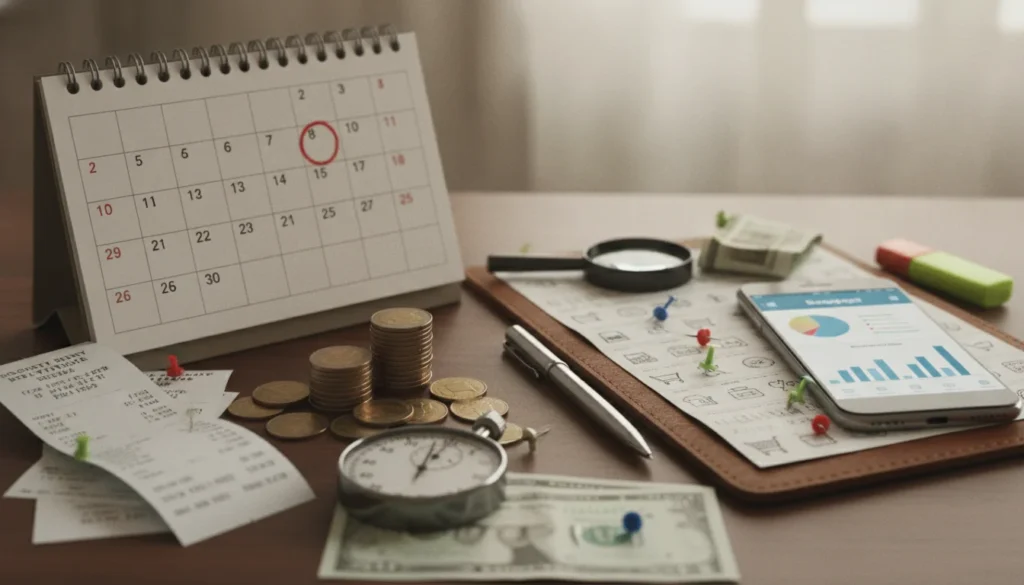
Before you can create an effective Plano de Economia Mensal e Organizar Melhor o Seu Dinheiro, you need real data. Spend one full month tracking every single expense — yes, even that R$8 coffee or the impulse buy at the pharmacy. You can use a notebook, a free app, or a simple spreadsheet.
The point isn’t perfection; it’s visibility.
Many people are shocked when they see how much they spend on small recurring purchases. Subscriptions you forgot about, food delivery apps, multiple streaming services — these add up fast. This tracking phase is uncomfortable for some, but it’s the foundation everything else is built on.
You can’t fix what you can’t see.
- Write down every purchase, no matter how small
- Categorize expenses (food, transport, entertainment, bills)
- Note which purchases were necessary vs. impulsive
- Review your bank and credit card statements for forgotten subscriptions
Build a Realistic Budget Based on Your Income
Once you know where your money actually goes, it’s time to build a budget that reflects reality — not wishful thinking. A common approach is the 50/30/20 rule: 50% of your income for needs (rent, utilities, groceries), 30% for wants (dining out, hobbies, entertainment), and 20% for savings and debt repayment. This framework is flexible and can be adjusted based on your specific situation.
If you’re in a tighter financial spot, you might need to flip the ratio temporarily — focusing more on needs and debt while trimming wants to nearly zero. The important thing is that your budget should be a living document. Revisit it monthly, because your income, expenses, and priorities will shift over time, and your personal finance organization should evolve with them.
Automate Your Savings Before You Spend
One of the most powerful tricks for sticking to a Plano de Economia Mensal e Organizar Melhor o Seu Dinheiro is automation. As soon as your paycheck lands, set up an automatic transfer to a separate savings account — even if it’s a small amount at first. This “pay yourself first” approach removes the temptation to spend money that was meant to be saved.
Many banks allow you to schedule automatic transfers on payday. If your bank doesn’t offer this, set a recurring calendar reminder to do it manually. The psychological shift here is significant: instead of saving whatever is left over (which is often nothing), you’re prioritizing your future self from day one.
Separate Your Money Into Different Accounts or Envelopes
Mixing all your money into one account makes it incredibly easy to overspend, because everything looks available. A more effective money management technique involves splitting your funds into categories — either through multiple bank accounts, digital wallets, or even the old-school envelope method using cash.
For example, you could have one account for fixed bills, another for groceries and daily expenses, another for savings goals, and another for “fun money” that you can spend guilt-free because it’s already been accounted for. This separation creates psychological boundaries that make overspending much harder.
- Bills account: rent, utilities, insurance, subscriptions
- Daily expenses account: groceries, transport, small purchases
- Savings account: emergency fund, long-term goals
- Discretionary account: entertainment, dining out, hobbies
Set Specific, Time-Bound Financial Goals
Vague goals like “save more money” rarely work because there’s no clear finish line. Instead, set specific targets: “Save R$3,000 for an emergency fund within 6 months” or “Pay off R$1,500 in credit card debt by December.” Specific goals give your Plano de Economia Mensal e Organizar Melhor o Seu Dinheiro direction and make progress measurable.
Breaking large goals into smaller monthly targets also makes them feel achievable. If you need to save R$3,000 in six months, that’s R$500 per month — a number you can actually plan around. Write your goals down somewhere visible, like a note on your fridge or a reminder in your phone, to keep them top of mind.
Cut Costs Without Feeling Deprived
Cutting expenses doesn’t have to mean giving up everything you enjoy. The trick is identifying which expenses bring you genuine value and which ones are just habits or “default” purchases you’ve never questioned. Look for subscriptions you barely use, meal delivery fees that add up quickly, or brand-name products where a generic alternative would work just as well.
A practical approach is the “pause and ask” technique: before any non-essential purchase, wait 24 hours and ask yourself if you’ll still want it tomorrow. This simple pause eliminates a huge percentage of impulse buys without requiring willpower in the moment — because the decision gets made later, when emotions have cooled down.
- Audit subscriptions monthly and cancel unused ones
- Cook at home more often, even just a few extra meals per week
- Compare prices before renewing insurance or service contracts
- Use cashback or rewards programs strategically, not as an excuse to spend more
Build an Emergency Fund as Your Financial Safety Net

An emergency fund is the cornerstone of any solid financial plan. Without one, a single unexpected expense — a car repair, a medical bill, a sudden job loss — can derail months of progress and push you back into debt. Most financial experts recommend building up three to six months of essential expenses in an easily accessible account.
Start small. Even R$50 or R$100 per month adds up over time, and having even a partial emergency fund can prevent you from relying on credit cards during a crisis. This fund should be separate from your regular savings goals — it’s not for vacations or big purchases, it’s strictly for genuine emergencies.
Tackle Debt Strategically Within Your Plan
If you’re carrying debt, your Plano de Economia Mensal e Organizar Melhor o Seu Dinheiro needs to include a clear repayment strategy. Two popular methods are the “snowball” method (paying off the smallest debts first for quick psychological wins) and the “avalanche” method (paying off the highest-interest debts first to save more money overall).
Neither approach is universally “better” — it depends on what motivates you. If you need quick wins to stay motivated, snowball works well. If you’re disciplined and want to minimize interest paid, avalanche is mathematically superior.
Whichever method you choose, make sure you’re paying more than the minimum whenever possible, since minimum payments often barely cover interest.
Review and Adjust Your Plan Every Month
A budget isn’t something you set once and forget. Life changes — rent increases, new expenses pop up, your income might fluctuate. Set aside 30 minutes at the end of each month to review what worked, what didn’t, and where you need to adjust.
This habit transforms your monthly financial review from a chore into a powerful tool for ongoing improvement.
During this review, ask yourself honest questions: Did I stick to my budget categories? Where did I overspend, and why? Did any unexpected expenses come up that I should plan for next month? This reflection process is what separates people who succeed long-term with their Plano de Economia Mensal e Organizar Melhor o Seu Dinheiro from those who give up after a few weeks.
Use Technology to Simplify Tracking and Stay Consistent
You don’t need to do everything manually. There are plenty of free and paid apps designed to help with budgeting, expense tracking, and goal setting. Many connect directly to your bank account and automatically categorize transactions, saving you time and reducing the friction that often causes people to abandon their financial plans.
If you’re looking for tools to get started, resources like Mint or Avoid Common Mistakes That Sabotage Savings Plans
Even with the best intentions, certain mistakes can quietly derail your progress. Being aware of these pitfalls in advance can help you avoid them and keep your Plano de Economia Mensal e Organizar Melhor o Seu Dinheiro on track month after month. Personal finance is a marathon, not a sprint, and it’s easy to feel discouraged if you’re focused only on the big end goal. Take time to acknowledge progress — paying off your first debt, hitting your first R$1,000 in savings, or sticking to your budget for three months straight. These milestones matter and reinforce the positive habits you’re building. Consider setting up small, budget-friendly rewards for hitting milestones. This isn’t about undoing your progress with overspending — it’s about creating positive associations with good financial behavior, so that managing money feels rewarding rather than purely restrictive. Creating a Plano de Economia Mensal e Organizar Melhor o Seu Dinheiro isn’t a one-time task — it’s an ongoing practice that grows stronger the more you engage with it. Start small, be patient with yourself, and remember that consistency matters far more than perfection. Every month you stick with your plan, even imperfectly, you’re building financial resilience that will pay off for years to come. What strategies have worked best for you when it comes to managing your monthly finances? Have you tried any of the tips mentioned here, or do you have your own methods for staying on track? Share your experiences in the comments below — your insights might be exactly what another reader needs to hear today! How much should I save each month? What if my income changes every month? Is it better to pay off debt or save first? How long does it take to see results from a monthly savings plan? Do I need a financial advisor to create this plan? Michael Rowan is a dedicated writer and researcher specializing in Personal Finance and Investments. With a passion for helping individuals make smarter financial decisions, he creates informative and practical content designed to simplify complex financial topics.
Celebrate Small Wins Along the Way
Final Thoughts on Building Lasting Financial Habits
Frequently Asked Questions
A common guideline is to aim for at least 20% of your income, but if that feels impossible right now, start with whatever amount you can manage consistently — even 5% is better than nothing. The key is building the habit first; you can increase the percentage as your situation improves.
If you have variable income, base your budget on your lowest expected monthly income, and treat any extra earnings as a bonus to put toward savings or debt. This approach prevents overspending during good months and protects you during leaner ones.
Most experts recommend building a small starter emergency fund (around R$500-R$1,000) first, then focusing on high-interest debt, and finally building a larger emergency fund and other savings goals. This balanced approach prevents new debt from emergencies while still attacking existing debt aggressively.
Many people notice reduced financial stress within the first month simply from having more clarity and control. Tangible savings growth typically becomes noticeable within three to six months, especially once automation and budget adjustments are fully in place.
Not necessarily. The strategies outlined here are designed to be self-implemented using free tools and basic discipline. However, if your financial situation is complex — multiple debts, investments, or business income — consulting a professional can provide personalized guidance.
Keep in mind this article is for informational purposes and isn’t a substitute for professional financial advice.